With spring rapidly approaching, what better time of year is there to get out the walking boots, give them a bit of a dusting after a long winter of neglect, and head outside to explore some nature? Today I’m going to write about one of my favourite walks in the Prague area. The Prokopské údolí valley, whose canyon reaches a depth of up to 70 meters in places and was formed by erosive activity over the last million years, is a clear example of the geological development of rocks from the Upper Ordovician to the Middle Devonian periods.
Start a pohodový výlet: jak se dostat a co čekat na začátku stezky
The trail starts at tram stop Hlubočepy (lines 20, 5, 12 & 4), just a few stops down the river from Smíchovské nádraží. After a couple of minutes you will pass under a picturesque viaduct called Prague Semmering (like the famous Semmering Railway in Austria). Follow the marked green tourist trail, past Praha- Hlubočepy train station and some village buildings, into Prokopské údolí proper.
Soon, part of the trail will deviate to the right to the picturesque lake surrounded by cliffs, where people like feeding ducks. Bring some fresh lettuce, rice or other food suitable for water birds and enjoy your contact with nature in this serene place. Not far away, on the the right hand side, there will be a small zoo with a couple of sheep and goats. There is a food dispenser installed on the fence, so feel free to feed them, too, if you like, all the animals are very friendly.
Pozoruhodná místa v údolí: skály, kříž a podzemí
As you walk along the trail, you will soon pass a cliff with a wooden cross at the top, marking the place where the 18th century church of Saint Procopius once used to stand. Right behind it on the right side, you will find a deep cave, which is really cool. If you are not afraid of walking a couple of dozens of meters in the complete darkness, try walking it through. You can then easily return to the green trail.
After approximately 4km you will meet a second trail, the yellow one. If you are visiting Prague with a dog, this hike will be just perfect for you. The itinerary isn't too challenging even for very small dogs. However, this particular route is more interesting in the second place where the trail branches off, which is to the left hand side underneath the Klukovice viaduct. After the break, go back down to the viaduct and rejoin the green trail, and follow it along as it meanders past Praha-Holyně.
Once past Holyně, the path makes its way past some quarries, where you can find fossils lying around quite easily, and where you might sometimes see rock climbers in the summer. After the quarries the path splits, and you have a choice of the green trail or the pink bicycle trail. The green trail is slightly steeper at this point, so if you are having issues with mobility this can be another reason to take the pink trail. From here, it is just a short walk the rest of the way into Řeporyje, where the trail comes to an end just a few metres from Pivovar Řeporyje. This is a fantastic restaurant, and I can highly recommend the food there, which makes it a perfect place to end the day's walk.
Prokopské údolí jako celkový zážitek: pro koho je vhodný a co si vzít s sebou
This is a trail that is suitable for everyone, as there are no really steep or difficult parts at all. If you want to check out the route for yourself, you can find it at the below link. Want to learn more about off-the-beaten-path places in Prague? Ask our guides directly during one of our free walking tours!
Thank you for reading the article. Have you read our recommendations for the Top 10 things to do in Prague?
Historie a geologie Prokopského údolí: co stojí za tímto místem
Prokopské a Dalejské údolí tvoří nejsevernější výběžek Českého krasu, který zasahuje na území Prahy. Atraktivní krajinný ráz určují především hluboko zaříznutá údolí, jejichž tvar po tisíciletí utvářely toky zdejších potoků, dramatické skalní výchozy a několik bývalých lomů. Hlavní horninou celé oblasti jsou vápence, které determinují její převážně stepní charakter a druhovou pestrost místní flóry a fauny. I proto zde bylo zřízeno hned několik zvláště chráněných území. Dnem obou údolí prochází populární cyklostezka, četné turistické trasy pro pěší a dvě naučné stezky. Největším turistickým lákadlem je ovšem vyhlídková jízda motorovým vláčkem po směle projektované železniční trati, která je nad údolím vedena přes impozantní 20 metrů vysoké viadukty (jsou chráněny jako technická památka). Přezdívá se jí „Pražský Semmering“ podle známé alpské trati v Rakousku.
Tucked away in the southwestern part of Prague, Prokopské údolí, or Prokop Valley, is a remarkable blend of history, geology, and nature. Photo: Marek Stožický, Radio Prague InternationalDespite being surrounded by urban districts, Prokop Valley remains a haven of tranquility. Walking along its well-marked hiking trails, visitors encounter striking limestone formations, sheer cliffs, and rolling wooded hills. The valley’s distinct character comes from its geological past-formed by sedimentary processes in the Paleozoic era and later sculpted by erosion. Dalejský Stream flows through Prokop Valley|Photo: Vít Pohanka, Radio Prague International
The valley has been inhabited since prehistoric times. Archaeological discoveries reveal that early humans lived here as far back as the Stone Age, with pottery shards and tools unearthed at various sites. Prokop Valley offers nice views of Prague|Photo: Miloš Turek, Radio Prague International
From quarries to natural reserveThe valley was one of Prague’s key sources of limestone. Dalejský Mill depicted on a postcard dated arround 1900|Photo: Ferdinand Kneifel, Wikimedia Commons, public domain
The valley’s quarries provided the stone that built much of historic Prague, especially during the 19th-century expansion when demand for construction materials soared. Carts with limestone have been passing through the tunnel since the 19th century|Photo: Marek Stožický, Radio Prague International
Unfortunately, limestone mining also led to the loss of an extraordinary natural wonder. In 1890, quarrying operations destroyed a 120-meter-long cave containing fossils of mammoths, bears, rhinoceroses, bison, and even early human remains. This cave was also steeped in legend-according to local stories, Saint Prokop once lived here as a hermit and battled the devil in these very rocks. The Church of St. Joachim Barrande|Photo: Vesmir, 1884/Wikimedia Commons, public domain
Prokop Valley holds a special place in the history of paleontology. French engineer and scientist Joachim Barrande dedicated much of his life to studying fossils in this area, describing over 3,600 extinct species. His work was so influential that the geological region between Prague and Plzeň was named Barrandien in his honor. Today, his legacy also lives on in the Prague district of Barrandov, home to the country’s famous film studios.
One of the valley’s most geologically significant sites is Mušlovka, a limestone quarry once rich in fossils. Rocks of Prokopské údolí |Photo: Vít Pohanka, Radio Prague International
A protected landscapeOne of the valley’s most protected fossil sites is Kovářovic Mez, where strict regulations prohibit breaking rocks from the cliffs. However, visitors are allowed to collect prehistoric fossils found on the surface.
Walking through the valley, it’s easy to see why this area remains one of Prague’s most cherished natural reserves. The Prokop Valley (Czech: Prokopské údolí) is one of the best natural areas in Prague, with impressive rock formations, ancient caves and quiet hiking trails. It is hard to believe that this nature reserve is quite close to the centre of Prague.
The Prokop Valley is located in the southwest of Prague and is a mix of history, geology and nature. It is a protected landscape and part of the Czech Karst, a beautiful natural environment formed over millions of years.
How to get there and what to see?Take tram 20 from the Malostranská stop and get off at the Zlichov stop. Walk through the tunnel and keep left, the road goes uphill. After about 15 minutes you will be on a marked walk. Look for the route on google maps or mapy.cz. (the Czech Google maps).The Prokop Valley is a protected nature reserve with well-marked walking trails, breathtaking views and special geological formations. It is an ideal outing for hikers, families with children and nature lovers.
You will walk through wooded areas, past rocks and fields on wide and narrow paths, sometimes steep but usually easy to do. It is the perfect outing if you want to see something other than Charles Bridge or Old Town Square.
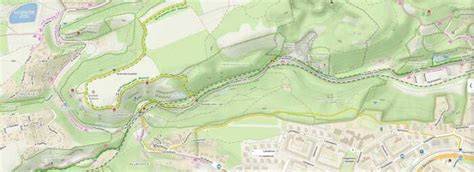
Walk through a Hidden WildernessThe Prokop Valley is an oasis of peace in the middle of nature. It is hard to believe that you are within Prague city boundary! Finding your way is easy because the various routes are well signposted. You will pass limestone formations, steep cliffs and rolling forested hills. If you stay on the paved paths, it is impossible to get lost.
Explore Prokop Valley: Where Prague’s past meets natural beautyProkop Valley was once a major source of limestone, the valley played a vital role in building the Czech capital. In the 19th century, demand for stone surged because of Prague’s rapid expansion.
One of the most iconic locations in the valley is Prokop Quarry (Prokopský lom). Originally it was home to the Dalejský Mill, the site was later transformed into a popular inn before its demolition in the 1970s. Today, the quarry stands as a scenic reminder of the area’s industrial past.
Over time, quarrying in the valley declined, and nature reclaimed the land. What was once a bustling mining site is now a peaceful, forested sanctuary. But the valley also holds a story of loss. In 1890, limestone mining led to the destruction of a 120-meter-long cave that contained rare prehistoric fossils, including remains of mammoths, cave bears, rhinoceroses, bison, and even early humans. This cave was also the site of local legend. Prokop, a Czech hermit and saint, lived in the cave and is said to have fought the devil. To honour him, a Baroque chapel was built above the cave site in the early 18th century. A landmark that still attracts visitors.
The Legacy of Joachim BarrandeProkop Valley is a landmark in the world of paleontology, largely thanks to the pioneering work of French engineer and scientist Joachim Barrande.