In 2025, Czechia ranked sixth among the world’s best-performing economies according to The Economist. The result was driven primarily by the extraordinary growth of the Czech stock market, as well as low unemployment, slowing inflation, and solid economic growth. Economist magazine. significant leap. the Czech stock market. Asian markets. positive picture of the Czech economy is also supported by other factors. Slovakia. projected at around 2.5%, with core inflation at just 1.4%. as Germany and Luxembourg. economies, higher productivity, and an inflow of investments.
Růst a stabilita ekonomiky ČR v kontextu Evropské unie
the Czech Republic participates in the European Single Market as a member of the European Union, and is therefore a part of the economy of the European Union. It uses its own currency, the Czech koruna, instead of the euro. It is a member of the Organisation for Economic Co-operation and Development (OECD).
The Czech Republic ranks 16th in inequality-adjusted human development and 24th in World Bank Human Capital Index, ahead of countries such as the United States, the United Kingdom or France. The industry sector accounts for 37% of the economy, while services account for 61% and agriculture for 2%. The principal industries are high tech engineering, electronics and machine-building, steel production, transportation equipment (automotive, rail and aerospace industry), chemicals, advanced materials and pharmaceuticals.
Makroekonomické ukazatele a průmyslové segmenty
As of 2023, the Czech GDP per capita at purchasing power parity is $50,961 and 698,706 Czech crowns ($31,368) at nominal value. As of September 2021, the unemployment rate in the Czech Republic was the lowest in the EU at 2.6%, and the poverty rate is the second lowest of OECD members, following Denmark. The Czech Republic ranks 21st in the Index of Economic Freedom, 32nd in the Global Innovation Index, 32nd in the Global Competitiveness Report, 41st in the ease of doing business index and 25th in the Global Enabling Trade Report.
The largest trading partner for both export and import is Germany, followed by other members of the EU. The Czech lands were among the first industrialized countries in continental Europe during the German Confederation era. After the First World War, the Austrian-Hungarian Empire collapsed and independent Czechoslovakia was created. Czechoslovakia had way too big industrial production for a small internal market and it missed the big market of the former Empire.
Historický kontext a transformační epochy
The Czechoslovak crown was introduced in April 1919 at a 1:1 ratio to the Austro-Hungarian currency, it became one of the most stable currencies in Europe. It is a widespread myth among Czechs that the First Republic belonged to the 10 most developed economies of the world. In fact it had the 14th highest GDP per capita in the world. The consequences of the 1938 Munich Agreement and subsequent Nazi Germany occupation were disastrous for the economy. After the World War II and the Communist Coup d'état were all the economies of the socialist countries tightly linked to that of the Soviet Union, in accordance with Stalin's development policy of planned interdependence.
With the disintegration of the communist economic alliance in 1991, Czech manufacturers lost their traditional markets among former communist countries in the east. Signs of economic resurgence began to appear in the wake of the shock therapy that the IMF labelled the big bang of January 1991. Since then, liberalization and astute economic management led to removal of price controls, low unemployment, a positive balance of payments position, a stable exchange rate, a shift of exports from former communist markets to Western Europe, and relatively low foreign debt. Two government priorities were strict fiscal policies and creating a good climate for incoming investment in the republic.
Privatizace, reformy a stabilita
In order to stimulate the economy and attract foreign partners, the government revamped the legal and administrative structure governing investment. Privatization through restitution of real estate to the former owners was largely completed in 1992. By 1998, more than 80% of enterprises were in private hands. The country’s economic transformation was far from complete. Political and financial crises in 1997 shattered the Czech Republic's image as one of the most stable and prosperous post-Communist states. Delays in enterprise restructuring and failure to develop a well-functioning capital market played major roles in Czech economic troubles, culminating in a currency crisis in May. The formerly pegged currency was forced into a floating system as investors sold their Korunas.
Growth in 2000-05 was supported by exports to the EU, primarily to Germany, and a strong recovery of foreign and domestic investment. Domestic demand is playing an ever more important role in underpinning growth as interest rates drop and the availability of credit cards and mortgages increases. Current account deficits of around 5% of GDP are beginning to decline as demand for Czech products in the EU increases. Inflation is under control. Recent accession to the EU gives further impetus and direction to structural reform.
Energetika a průmysl - klíčové sektory
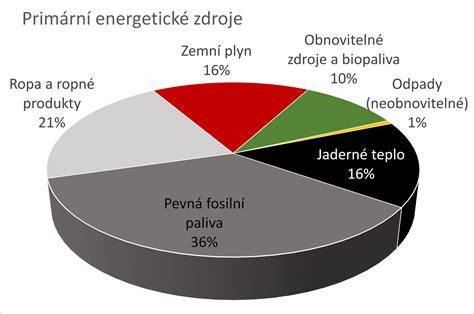
In the case of the Czech Republic, it is the Prague Stock Exchange (PSE). The Prague Stock Exchange is governed by the Capital Market Act and the stock exchange rules it sets itself. All of its activities are controlled by the Czech National Bank. The largest issue traded on the Prague Stock Exchange is the energy company ČEZ. The main activity of ČEZ is the sale of electricity, mainly generated from its own sources, and the related provision of support services to the electricity system. The current energy mix includes nuclear power, coal, natural gas and renewables, with plans for 50% nuclear share in the future energy supply.
Investice do výzkumu a vývoje a konkurenceschopnost
Czechia invested CZK 43.3 billion in research and development in 2025, around 10 percent more than a year earlier. The increase was the 10th fastest in the EU, but Czechia ranked only 16th overall, according to Eurostat. Government spending on R&D amounted to 0.51 percent of GDP, compared with an EU average of 0.69 percent. Per capita, Czechia spent EUR 160.8, or 56 percent of the EU average. The association noted that the rebound after weaker spending in 2024 contributed to the growth in R&D investment.
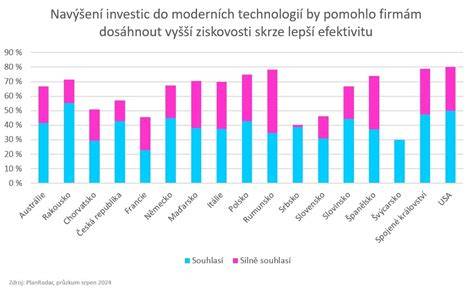
Czechia has climbed back into the EU’s top ten most advanced economies, ranking eighth this year despite inflation shocks and global uncertainty. Among post-communist EU states, only Slovenia performs at a comparable level. The ranking reflects a relatively strong foundation for households and businesses, with a complex industrial structure and high level of automation.
Globální postavení a budoucí výzvy
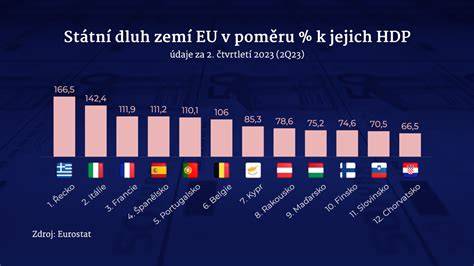
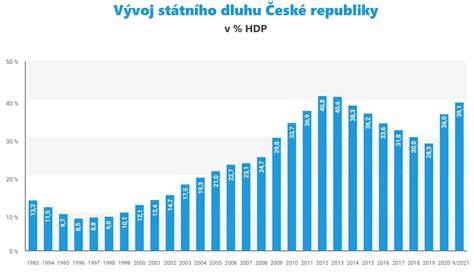
The new Prosperity Index places the country behind Sweden, Germany and Denmark, with a solid competitive base. The index highlights that the country stands out for its industrial structure, automation and comparatively low public debt, even after years of heavy investment. Economists caution that many indicators are reflected in real life with a delay of up to two years. The question remains: where is investment heading, and how will Central Europe catch up with Western European leaders?
European global competitiveness is a hot topic, with critiques that the EU is losing ground to the USA and China. The 2025 IMD and other rankings show mixed results within Europe, where Northern Western European economies lead, while several Central European economies lag behind in added value and high-margin output.